Post a listing
Tell the group what you have lost or found: what it is, where and when — with a photo.
Lost & Found Infrastructure
For anyone who has lost or found an item or a pet in Baku. The app is being built — the WhatsApp group is open now.
Open the WhatsApp group
Tell the group what you have lost or found: what it is, where and when — with a photo.
See what other group members have lost or found in Baku.
When the Evreeka! app launches, group members will be the first to get access.
A person loses something and doesn't know what to do.

This is not the absence of demand. It is the absence of a tool.
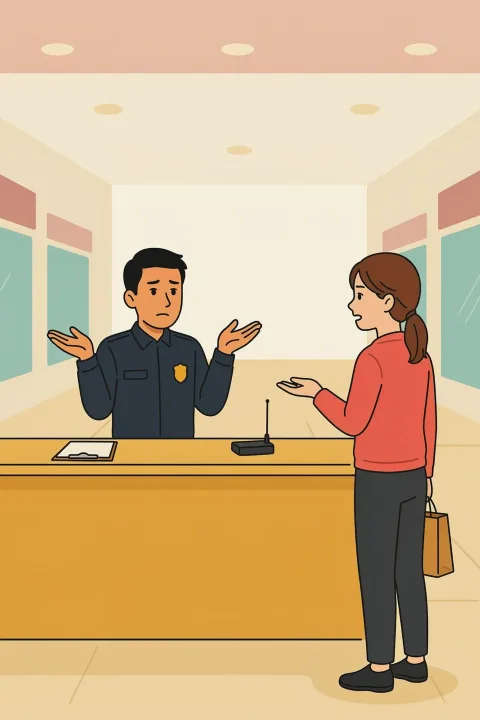
Social media doesn't work, and it's not a coincidence.
| What return requires | What social media offers |
|---|---|
| Search by content | A feed |
| Geo-filter | Nothing |
| Match notification | You have to monitor yourself |
| Listing lives for weeks | Hours |
| Shown to interested parties | Shown to followers |
Social media is broadcasting. Return is matching. The architectures are incompatible — no number of groups can fix that.
Asymmetry of motivation.

We build bridges between the owner and the finder, removing everything unnecessary that stands between the finder and the "send" button.
A service that matches owners with finders

Value appears on launch day, with zero proprietary database.

Item category, color, size, distinctive features — in free-form text.
Uploads a photo of the lost item or pet — AI extracts the visual vector.
Marks a point or zone on the map where the item was likely lost.
Specifies circumstances: public transport, a walk, a café, a shopping mall, etc.
Sets the amount — held in escrow until the item is returned.
Photographs the item or animal — AI immediately extracts the visual vector for comparison.
Location and time of discovery are captured automatically.
For documents — name from the document; for animals — breed, color, markings; for devices — serial number.
The finder's identity is not revealed until a confirmed match.

Exact match by documents, serial numbers, animal chips — instant match.

Intersection of the loss area and find location within a time window — filters out irrelevant candidates.

Comparison of photo vectors within the filtered subset — ranked by similarity.
The system outputs a ranked list of candidates — the final decision is made by a human. False matches are eliminated by multi-layer verification.
Every return increases your trust rating. A high rating is visible to other users.
The person who lost the item sets the reward amount when posting. The amount is held in escrow and paid upon return.
Active finders receive discounts and perks from partner services: delivery, storage, and other city services.
The finder doesn't have to be an altruist. The system works even if they simply want to earn money.
Losing a pet is the most painful emotional loss.

Baku hosts major international events — Formula 1, Dream Fest, concerts, sports championships. A foreign tourist loses something in an unfamiliar city: no language, no contacts, no idea where to go. High urgency and high willingness to pay.

Paid by the person who lost the item, only upon recovery.
This section is for venues, transport operators, banks, vet clinics, shelters and city services — and for investors.

We operate on third-party content. Search and notifications based on listings from open sources. Goal: prove that demand exists and is unmet.

People post directly because they get seen here. Parcel lockers, escrow, courier services, and a reward option become available.

Venues, transport companies, and banks connect as sources of found items — once we are already bringing them people, not asking for favors.
Found items journal for venues and transport operators, phase 3.
Return of found cards at a cost below card reissuance, phase 3.
~330,000 items a year pass through lost property; ~20% are claimed; cost of returning one item ~£100; return rate to owner ~24%.
24 million mishandled bags in 2025 — 4.9 per 1,000 passengers; ~$260 per bag.
Phones are the #1 lost item — over 1 million claims a year.
Key insight: ~0.1 items lost per 1,000 trips; return rate 20–24%; cost per return = tens of dollars → this is where B2B sales pay off.
Baku hosts Formula 1, major sports tournaments, and international forums. Every event is a concentrated audience with losses and money.

Project Owner
Creative director and screenwriter with a background in applied mathematics. Literary editor, co-founder of the İNDİ podcast and a prominent figure in Azerbaijan's intellectual, creative and media spheres; elite "What? Where? When?" expert.

AI Architect
AI architect with 20+ years in neural networks; grew from developer to C-level (CIO, CDO) at Azerbaijan's largest companies. Full-stack engineer: C#, .NET Core, Python, Swift, TensorFlow, ReactJS, PostgreSQL.

CTO
CTO and software architect with 25+ years in technology; founder of 9BIT — backend systems, web and mobile products, infrastructure and complex business automation. Experienced in API design, distributed systems, DevOps, product architecture and AI-powered integrations.